Garudasana (Eagle Pose): Steps, Benefits, and Precautions
Introduction
Garudasana, also known as the Eagle Pose, is a powerful balancing yoga asana that combines strength, flexibility, and focus. In Sanskrit, “Garuda” means eagle—the king of birds, known for its sharp vision and commanding presence. Practicing Garudasana helps improve concentration, balance, and body alignment while releasing stiffness in the joints.
This posture is commonly practiced in Hatha Yoga, Vinyasa Yoga, and Iyengar Yoga, making it a versatile asana for both beginners and advanced practitioners.
Meaning and Significance of Garudasana
Garuda, the mythical bird in Hindu mythology, is the mount of Lord Vishnu and symbolizes power, courage, and protection. Garudasana embodies these qualities by strengthening the practitioner’s mental and physical balance. The entwined arms and legs in this pose represent unity, focus, and coordination, which are essential for maintaining stability in life.
How to Perform Garudasana (Step-by-Step Guide)
Preparations Before Practice:
- Warm up with light stretches, especially the shoulders and legs.
- Practice basic standing poses like Tadasana to align posture.
- Perform in a calm environment with steady breathing.
Step-by-Step Instructions:
- Starting Position (Tadasana):
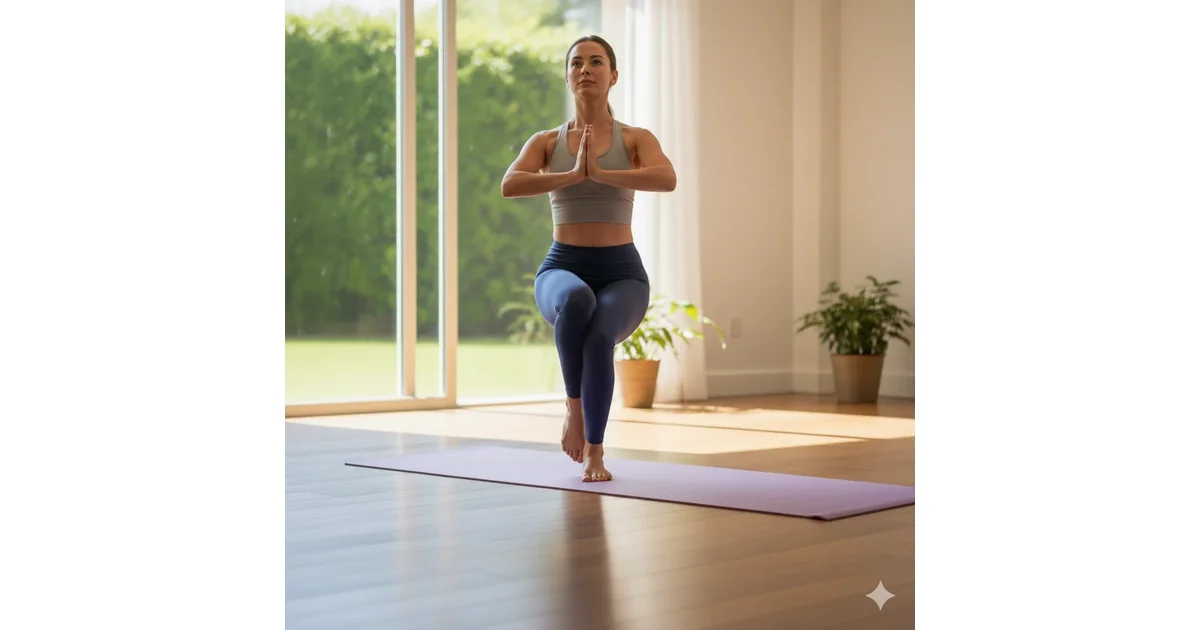
Stand straight with feet together, arms by your side, and spine erect. - Bend the Knees Slightly:
Shift your weight onto the left foot while keeping the body balanced. - Cross the Right Thigh Over the Left Thigh:
Wrap the right leg around the left leg, trying to hook the right foot behind the left calf. - Position the Arms:
Stretch both arms forward, then cross the left arm over the right arm at the elbows. - Interlock the Hands:
Bend the elbows, bring palms together, and align the thumbs in front of the face. - Balance and Focus:
Keep the spine straight, chest lifted, and gaze fixed at a single point (Drishti). - Hold the Pose:
Stay in this position for 15–30 seconds, breathing deeply and steadily. - Release:
Slowly unwind the arms and legs, returning to Tadasana. Repeat on the opposite side.
Benefits of Garudasana (Eagle Pose)
Practicing Garudasana regularly offers multiple physical, mental, and spiritual benefits:
Physical Benefits:
- Improves balance and stability.
- Strengthens calves, thighs, and ankles.
- Increases shoulder, hip, and joint flexibility.
- Enhances circulation and relieves stiffness.
- Helps correct posture and spinal alignment.
Mental & Emotional Benefits:
- Improves focus, concentration, and memory.
- Reduces stress and anxiety by calming the nervous system.
- Enhances mind-body coordination.
Therapeutic Benefits:
- Beneficial for people with sciatica and rheumatism.
- Helps manage varicose veins.
- Stimulates blood flow to the joints, reducing stiffness.
Precautions and Contraindications
While Garudasana is safe for most practitioners, certain conditions require caution:
- Avoid if suffering from serious knee, ankle, or shoulder injuries.
- People with vertigo or balance disorders should practice with support.
- Pregnant women should avoid deep twists and maintain balance carefully.
- Do not forcefully twist joints—move within comfort range.
Tips for Beginners
- Use a wall or chair for support until balance improves.
- If unable to hook the foot behind the calf, simply cross the leg and rest the toes on the floor.
- Focus on a steady gaze point (Drishti) to maintain stability.
- Practice consistently to gradually deepen flexibility and strength.
Variations of Garudasana
- Seated Garudasana: Performed while sitting in a chair, suitable for beginners and office practice.
- Garudasana Arms Only: Only the arm position is practiced, excellent for relieving shoulder stiffness.
- Reclined Garudasana (Supta Garudasana): Done lying on the back, focusing on hip and lower back stretch.
Breathing Pattern in Garudasana
- Inhale deeply before entering the pose.
- Maintain slow, steady breathing while holding the position.
- Exhale completely when releasing the pose.
Conclusion
Garudasana (Eagle Pose) is a powerful balancing asana that integrates physical strength, joint flexibility, and mental clarity. With regular practice, it not only enhances balance and posture but also sharpens concentration and reduces stress. Whether you are a beginner or an advanced yogi, Garudasana is a must-include posture in your daily yoga routine for holistic wellness.
Perform Gomukhasana | Do Shashangasana | Try Warrior II Pose | Follow Yoga Balance Rules | Ayurvedic Diet for FocusTrusted External Resources
For more information on yoga and natural wellness, explore these authoritative resources:
Q1. What is Garudasana in yoga?
Ans: Garudasana, or Eagle Pose, is a standing balance yoga asana that stretches the shoulders, hips, and legs while improving focus and stability.
Q2. What are the benefits of Garudasana?
Ans: Garudasana enhances balance, flexibility, and joint strength, reduces stress, improves concentration, and helps relieve stiffness in the shoulders and hips.
Q3. How do you perform Garudasana correctly?
Ans: Start in Tadasana, cross one leg over the other, entwine arms, keep spine straight, gaze forward, and hold for 15–30 seconds before switching sides.
Q4. Who should avoid Garudasana?
Ans: People with serious knee, ankle, or shoulder injuries, vertigo, or pregnant women should practice Garudasana cautiously or avoid deep twists.
Q5. Can beginners practice Garudasana?
Ans: Yes, beginners can practice Garudasana using a wall or chair for support and gradually increase balance and flexibility.
Q6. How long should I hold Garudasana?
Ans: Hold the pose for 15–30 seconds on each side while maintaining steady breathing, gradually increasing duration with practice.
Q7. Are there variations of Garudasana?
Ans: Yes, variations include Seated Garudasana (chair), Garudasana Arms Only (for shoulders), and Reclined Garudasana (Supta Garudasana) for hips and lower back.