Matsyasana in Lotus Pose: How to Do, Benefits, and Safety Tips
Introduction
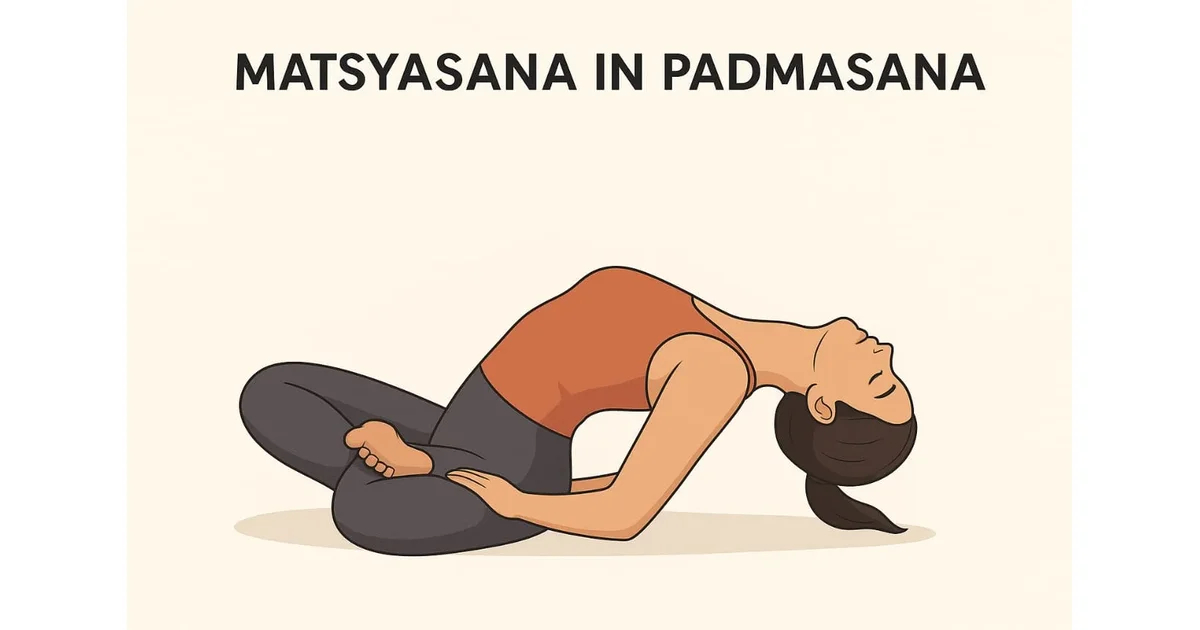
Matsyasana in Padmasana (Fish Pose in Lotus Posture) is one of the most traditional and spiritually uplifting yoga poses described in ancient yogic texts. It is a combination of Padmasana (Lotus Pose) and Matsyasana (Fish Pose), designed to expand the chest, improve breathing, and stimulate energy centers in the body.
This asana is often called the “Destroyer of all Diseases” in classical yoga literature because of its profound therapeutic effects. Practicing it regularly not only strengthens the spine and lungs but also enhances meditation and concentration by activating the Anahata (Heart Chakra) and Vishuddha (Throat Chakra).
How to Practice Matsyasana in Padmasana (Step-by-Step Guide)
Follow these steps carefully to perform the pose correctly:
Step 1: Get into Padmasana
- Sit in a comfortable position.
- Place your right foot on the left thigh and left foot on the right thigh, forming Padmasana (Lotus Pose).
- Keep the spine straight and hands resting on the knees.
Step 2: Recline Backward
- Slowly recline backward, using your elbows for support.
- Allow your back to rest on the ground while keeping the lotus position intact.
Step 3: Lift the Chest and Head
- Arch your back gently, lifting the chest upward.
- Tilt your head backward so that the crown of your head touches the floor.
- Your body weight should be supported by your hips and head.
Step 4: Position of Arms
- Place your hands beside your thighs or hold your toes for better stability.
- Relax the shoulders and expand the chest.
Step 5: Breathing and Duration
- Close your eyes and breathe deeply.
- Maintain the pose for 30 seconds to 2 minutes, depending on comfort.
- To release, gently lift your head, relax the back, and sit upright again.
Benefits of Matsyasana in Padmasana
Practicing this asana daily offers numerous physical, mental, and spiritual benefits:
1. Physical Benefits
- Expands the chest and improves lung capacity.
- Strengthens the neck, back, and abdominal muscles.
- Improves spinal flexibility and posture.
- Stimulates digestion and relieves constipation.
2. Mental Benefits
- Relieves stress, fatigue, and anxiety.
- Enhances focus, concentration, and mental clarity.
- Balances emotional energy and promotes relaxation.
3. Spiritual Benefits
- Activates Heart Chakra (Anahata) for love and compassion.
- Stimulates Throat Chakra (Vishuddha) for better communication.
- Creates a state of inner peace and meditation.
Precautions and Contraindications
Although Matsyasana in Padmasana is highly beneficial, it must be practiced with awareness:
- Avoid if you suffer from serious back, neck, or knee injuries.
- People with heart problems, hernia, or severe spinal disorders should practice under expert guidance.
- Beginners may find it difficult to perform in full Padmasana; try Matsyasana without Padmasana first.
- Pregnant women should strictly avoid this asana.
Tips for Beginners
- If Padmasana is challenging, practice Matsyasana in Sukhasana (Easy Pose) first.
- Use a yoga mat or soft surface to avoid discomfort.
- Practice early in the morning on an empty stomach for best results.
- Start with 20–30 seconds and gradually increase the duration.
Conclusion
Matsyasana in Padmasana is a powerful yoga posture that combines flexibility, strength, and deep breathing. By opening the chest, improving blood circulation, and activating vital chakras, it benefits the body, mind, and spirit. Practiced regularly and with proper guidance, it can transform your overall health and bring inner harmony.
Practice Halasana | Do Sarvangasana | Try Dhanurasana | Ayurvedic Foods for Flexibility | Yoga Āsana RulesTrusted External Resources
For more information on yoga and natural wellness, explore these authoritative resources:
Q1. What is Matsyasana in Padmasana?
Ans: Matsyasana in Padmasana is a classical yoga pose that combines Lotus Posture (Padmasana) with Fish Pose (Matsyasana), offering physical and spiritual benefits.
Q2. How long should I hold Matsyasana in Padmasana?
Ans: Beginners can start with 20–30 seconds and gradually increase to 2 minutes with regular practice.
Q3. Can beginners try this pose?
Ans: Yes, but beginners should first master Matsyasana without Padmasana before attempting the advanced version.
Q4. Which chakras are activated by this asana?
Ans: It primarily activates the Heart Chakra (Anahata) and Throat Chakra (Vishuddha).
Q5. What are the best times to practice?
Ans: Early morning on an empty stomach or in the evening after a light meal is ideal.