Virabhadrasana II (Warrior II Pose): Steps, Benefits, and Precautions
📌 Introduction
Among the most iconic postures in yoga, Virabhadrasana II (Warrior II Pose) represents the strength, courage, and focus of a warrior. Rooted in ancient mythology, this pose is named after the fierce warrior Virabhadra, created by Lord Shiva. Symbolically, Warrior II embodies stability, mindfulness, and determination, making it an essential part of Hatha and Vinyasa yoga sequences.
Practiced regularly, this posture not only strengthens the body but also cultivates inner resilience and mental clarity.
✅ Step-by-Step Guide to Practicing Warrior II
Follow these instructions to perform Virabhadrasana II with correct alignment:
- Starting Position
- Stand in Tadasana (Mountain Pose) with your feet together and arms by your sides.
- Take a deep breath to center yourself.
- Leg Positioning
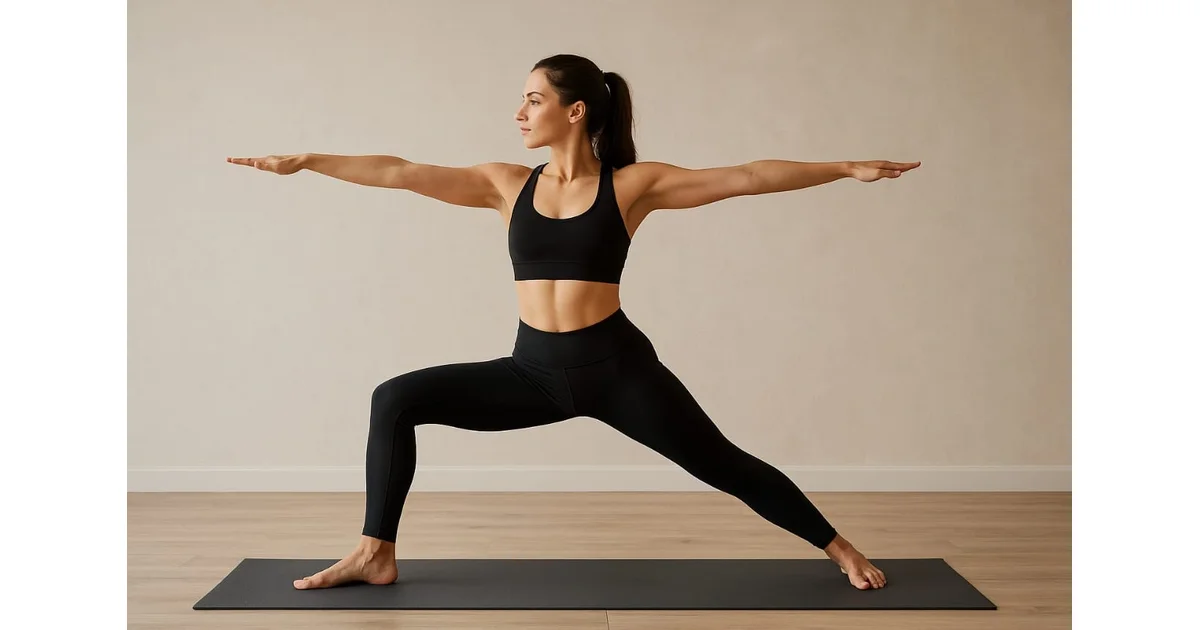
- Step your feet wide apart (approximately 3–4 feet).
- Turn your right foot outward 90° so toes point forward.
- Slightly turn your left foot inward (15–20°).
- Arm and Torso Alignment
- Raise your arms to shoulder height, parallel to the floor.
- Stretch them actively in opposite directions, palms facing down.
- Keep your torso upright, spine elongated.
- Knee and Hip Alignment
- Exhale and bend your right knee directly over the ankle, creating a 90° angle.
- Ensure your thigh is parallel to the floor and knee points toward the toes.
- Keep hips and shoulders aligned, facing sideways.
- Focus and Gaze
- Turn your head gently to the right.
- Fix your gaze over your right fingertips.
- Maintain steady, controlled breathing.
- Duration
- Hold the pose for 20–40 seconds or 5–10 breaths.
- Inhale to straighten the leg and return to starting position.
- Repeat on the left side.
💪 Benefits of Virabhadrasana II (Warrior II Pose)
🩺 Physical Benefits
- Strengthens legs, thighs, hips, calves, and shoulders.
- Stretches groins, chest, and lungs.
- Enhances core stability and stamina.
- Improves circulation and spinal alignment.
- Boosts overall endurance and balance.
🧘 Mental & Emotional Benefits
- Increases focus and concentration.
- Builds inner confidence and resilience.
- Cultivates a sense of grounding and mindfulness.
- Encourages mental clarity and calmness.
⚠️ Precautions and Contraindications
- Avoid if suffering from severe knee, hip, or ankle injuries.
- Those with high blood pressure should avoid holding the pose for long durations.
- If you have neck issues, keep your head straight instead of turning to the side.
- Pregnant women should practice with modifications under expert guidance.
🧘 Tips for Beginners
- Use a shorter stance if balance feels unstable.
- Ensure the front knee does not extend beyond the ankle.
- Place your back heel against a wall for added support.
- Focus on extending both arms equally for proper balance.
🔄 Variations of Warrior II
- Reverse Warrior (Viparita Virabhadrasana): Bend the torso backward with one arm reaching overhead.
- Humble Warrior (Baddha Virabhadrasana): Fold forward inside the bent knee with hands clasped behind.
- Dynamic Warrior Flow: Transition between Warrior I, II, and III for improved strength and coordination.
📖 Mythological Significance
In yogic tradition, Warrior Poses honor Virabhadra, the fierce warrior created by Lord Shiva. They symbolize the inner battle against negativity, fear, and distraction, teaching practitioners to embody focus, strength, and determination.
Try Garudasana | Practice Chakrasana | Follow Āsana Practice Rules | Ayurvedic Diet for Strength | HomeTrusted External Resources
For more information on yoga and natural wellness, explore these authoritative resources:
Q1: What is Virabhadrasana II in yoga?
Ans: Virabhadrasana II, or Warrior II Pose, is a standing yoga posture that strengthens legs, opens hips, improves balance, and promotes mental focus. It embodies the courage and strength of a warrior.
Q2: How do you perform Warrior II correctly?
Ans: Stand in Tadasana (Mountain Pose).
Step feet wide apart.
Turn the front foot 90° and back foot slightly inward.
Extend arms parallel to the floor.
Bend the front knee over the ankle to 90°.
Keep torso upright and gaze over the front hand.
Hold for 20–40 seconds, then switch sides.
Q3: What are the benefits of Virabhadrasana II?
Ans: Warrior II strengthens the legs, hips, core, and shoulders, stretches groin and chest, improves stamina and balance, and cultivates mental focus and stability.
Q4: Who should avoid doing Warrior II pose?
Ans: Avoid or modify Warrior II if you have knee, hip, or ankle injuries, high blood pressure, or neck problems. Pregnant women should practice under expert supervision.
Q5: How long should I hold Warrior II pose?
Ans: Beginners: 20–30 seconds per side.
Intermediate/Advanced: 30–60 seconds, focusing on controlled breathing and proper alignment.