Dhanurasana (Bow Pose) – How to Do, Benefits & Precautions
🌿 Introduction to Dhanurasana
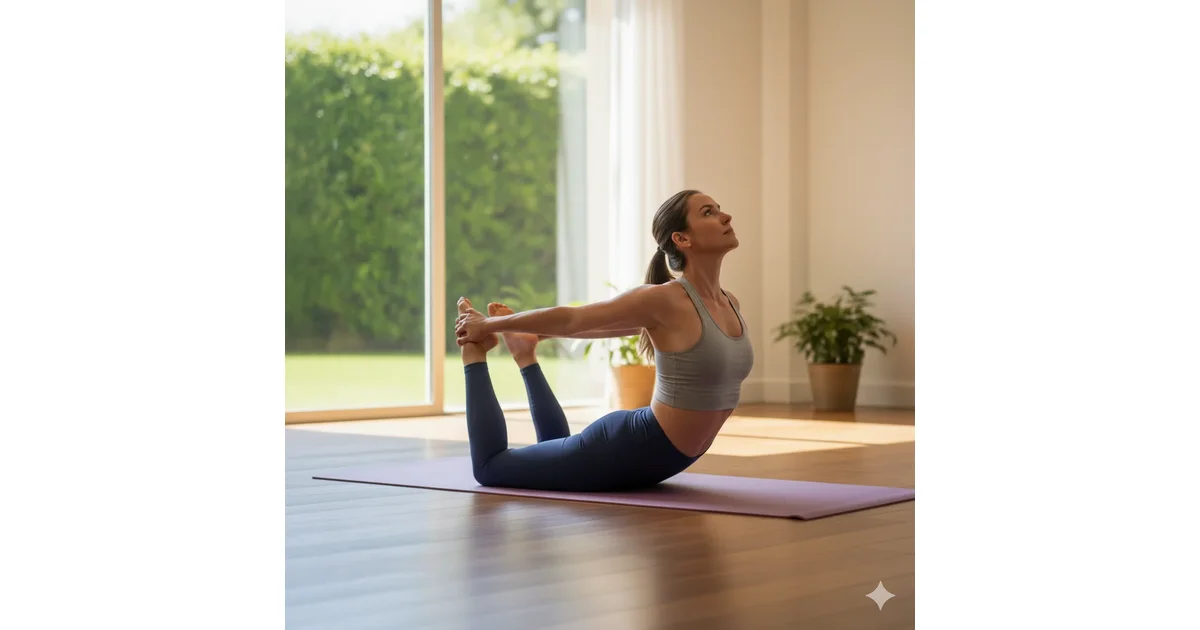
Yoga is a holistic practice that unites body, mind, and soul. Among the many yoga asanas, Dhanurasana (Bow Pose) stands out for its powerful impact on flexibility, digestion, and spinal strength. In Sanskrit, “Dhanur” means bow, and “Asana” means posture. When you perform this pose, your body takes the shape of a bow, symbolizing strength and focus.
Regular practice of Dhanurasana not only improves posture but also helps release stiffness from the back and shoulders, making it one of the most recommended yoga postures for a healthy lifestyle.
🧩 Step-by-Step Guide to Dhanurasana
🔹 1. Starting Position
- Lie flat on your stomach on a yoga mat.
- Keep your arms beside the body and legs stretched straight.
🔹 2. Bending the Knees
- Gently bend both knees.
- Bring your heels close to the hips.
🔹 3. Hold the Ankles
- Reach backward with your hands.
- Firmly hold your ankles (not the feet).
🔹 4. Lift the Body
- Inhale deeply and raise your chest off the ground.
- At the same time, pull your legs upward and backward.
- Balance the body on your abdomen.
🔹 5. Final Pose
- Your body now looks like a bow – arms as the string and torso/legs as the curve.
- Keep your gaze forward and shoulders relaxed.
- Hold this position for 20–30 seconds.
🔹 6. Releasing the Pose
- Exhale slowly.
- Bring your chest and legs down gently.
- Relax in Makarasana (Crocodile Pose) or Shavasana (Corpse Pose).
🌟 Health Benefits of Dhanurasana
💪 Physical Benefits
- Strengthens the spine and back muscles – improves posture and reduces stiffness.
- Improves digestion – massages abdominal organs and stimulates appetite.
- Opens chest and shoulders – beneficial for people with respiratory issues like asthma.
- Reduces belly fat – tones the abdomen and helps weight management.
- Boosts blood circulation – energizes the entire body.
🧘♀️ Mental & Emotional Benefits
- Relieves stress and fatigue by activating the nervous system.
- Improves focus and concentration, making it useful for students and professionals.
- Enhances mood and reduces anxiety by balancing energy flow.
⚠️ Precautions and Contraindications
While Dhanurasana offers numerous health benefits, it must be practiced mindfully.
- ❌ Avoid if you have hernia, peptic ulcer, or high blood pressure.
- ❌ Not suitable for pregnant women.
- ❌ People with severe back pain, spinal injury, or neck issues should avoid it.
- ❌ Those who have recently undergone abdominal surgery should not perform this posture.
👉 Beginners should practice under a certified yoga instructor to prevent injury.
💡 Pro Tips for Practicing Dhanurasana
- Perform on an empty stomach or 4–5 hours after a meal.
- Warm up with simple stretches before attempting this pose.
- Use a yoga mat or soft surface to avoid strain on the abdomen.
- Focus on deep breathing while holding the pose.
- Start with 15 seconds and gradually increase up to 1 minute with practice.
🧘 Variations of Dhanurasana
To make the practice more engaging, you can try these variations:
- Parsva Dhanurasana (Side Bow Pose) – Rolling gently to one side while holding the pose.
- Half Bow Pose (Ardha Dhanurasana) – Holding one ankle at a time, useful for beginners.
- Dynamic Dhanurasana – Rocking forward and backward in the bow shape to massage the abdomen.
🔮 Spiritual Significance of Dhanurasana
In yogic philosophy, Dhanurasana symbolizes focus, strength, and alignment. Just like a bow aims at a target, this posture teaches you to direct your inner energy towards achieving balance in life. It stimulates the Manipura Chakra (Solar Plexus Chakra), which governs confidence, willpower, and digestion.
Practice Chakrasana | Learn Bhujangasana | Perform Ustrasana | Sit in Vajrasana | Follow Asana GuidelinesTrusted External Resources
For more information on yoga and natural wellness, explore these authoritative resources:
Q1. What is Dhanurasana good for?
Ans: It strengthens the spine, improves flexibility, reduces belly fat, and improves digestion.
Q2. Can beginners do Dhanurasana?
Ans: Yes, but they should start with Half Bow Pose (Ardha Dhanurasana) under guidance.
Q3. How long should Dhanurasana be held?
Ans: Start with 15–20 seconds and gradually increase to 45–60 seconds with practice.
Q4. Is Dhanurasana good for weight loss?
Ans: Yes, it tones abdominal muscles, reduces belly fat, and boosts metabolism.
Q5. Who should avoid Dhanurasana?
Ans: Pregnant women and people with spinal injury, hernia, or high blood pressure should avoid it.